Ollerton’s First Impressions
The wife went swimming the other day so I tagged along. Having been underwhelmed by Tuxford’s rainwater gutter bracket scene, I was curious what Ollerton had to offer. So after dropping the wife at the swimming pool I continued on to Ollerton, eventually parking up in the village centre. It’s a lovely picturesque place. We’ve been there several times for picnics — we’ve got some sweet images of our children eating ice cream by the water mill, not ten yards from where I’d parked.
Reproduction Brackets, Done with Care
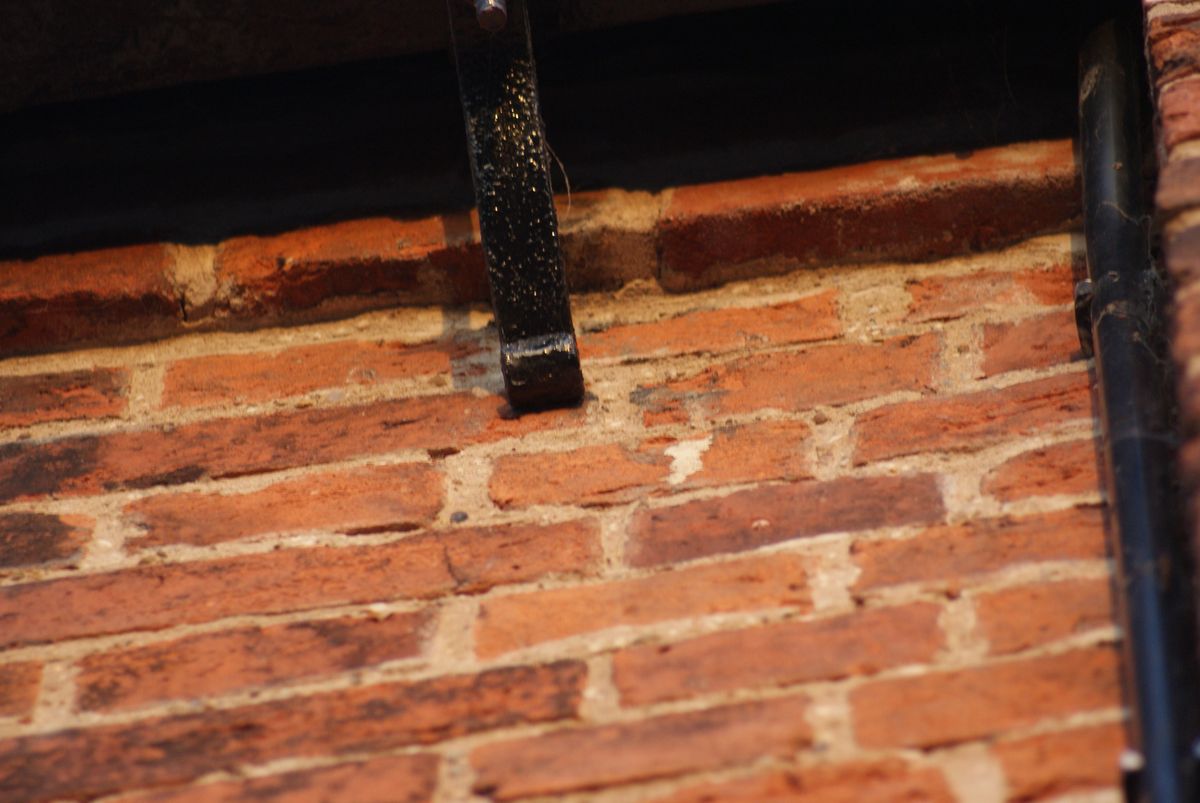
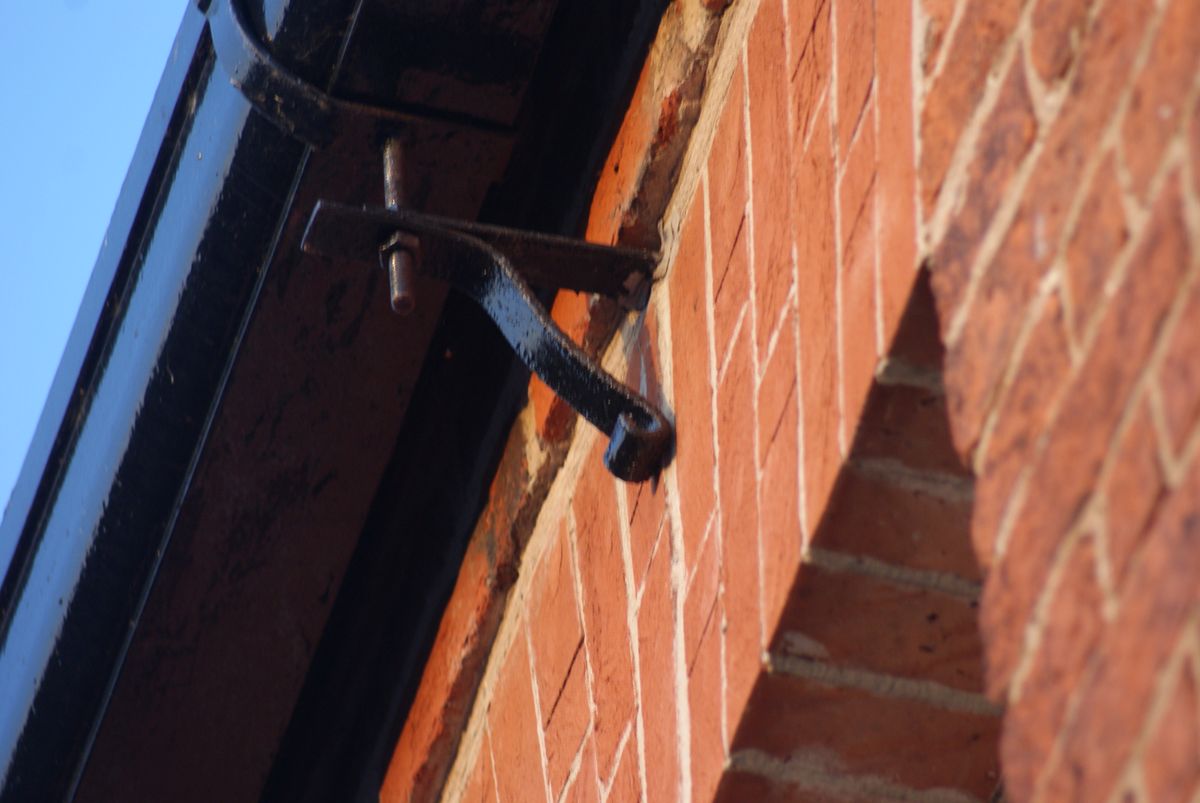
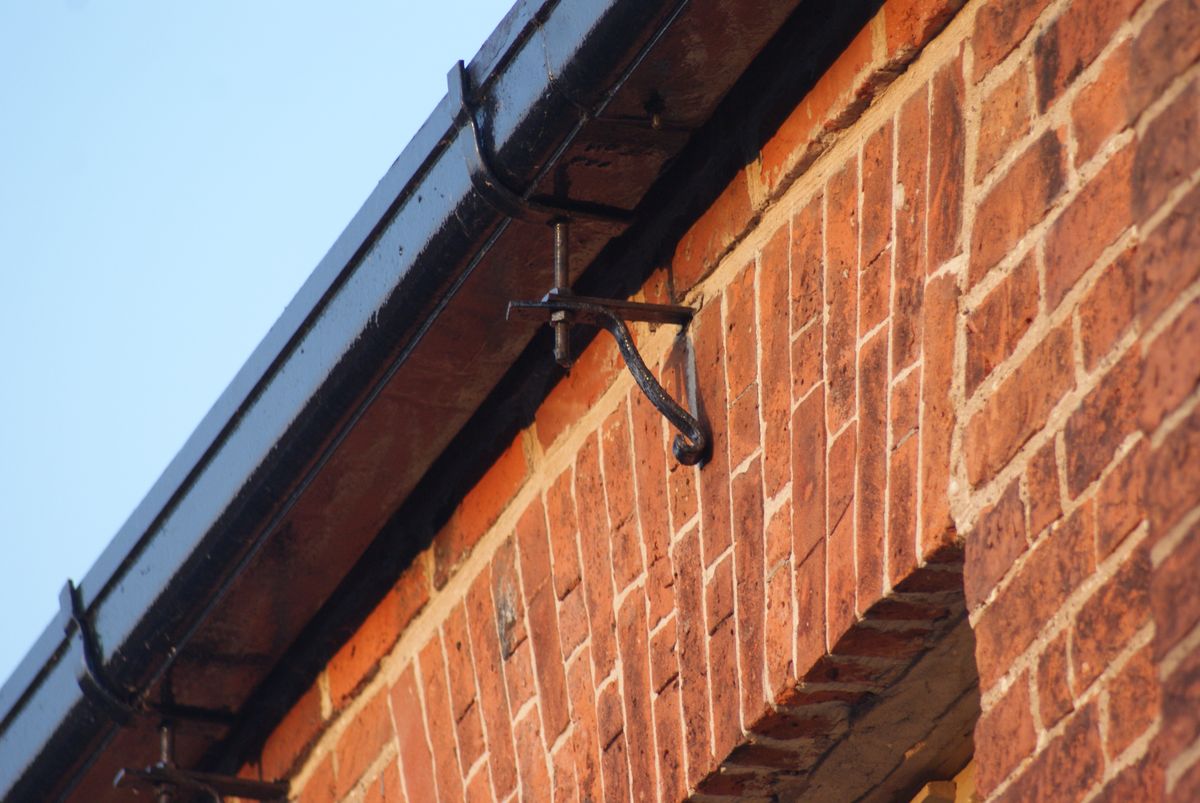
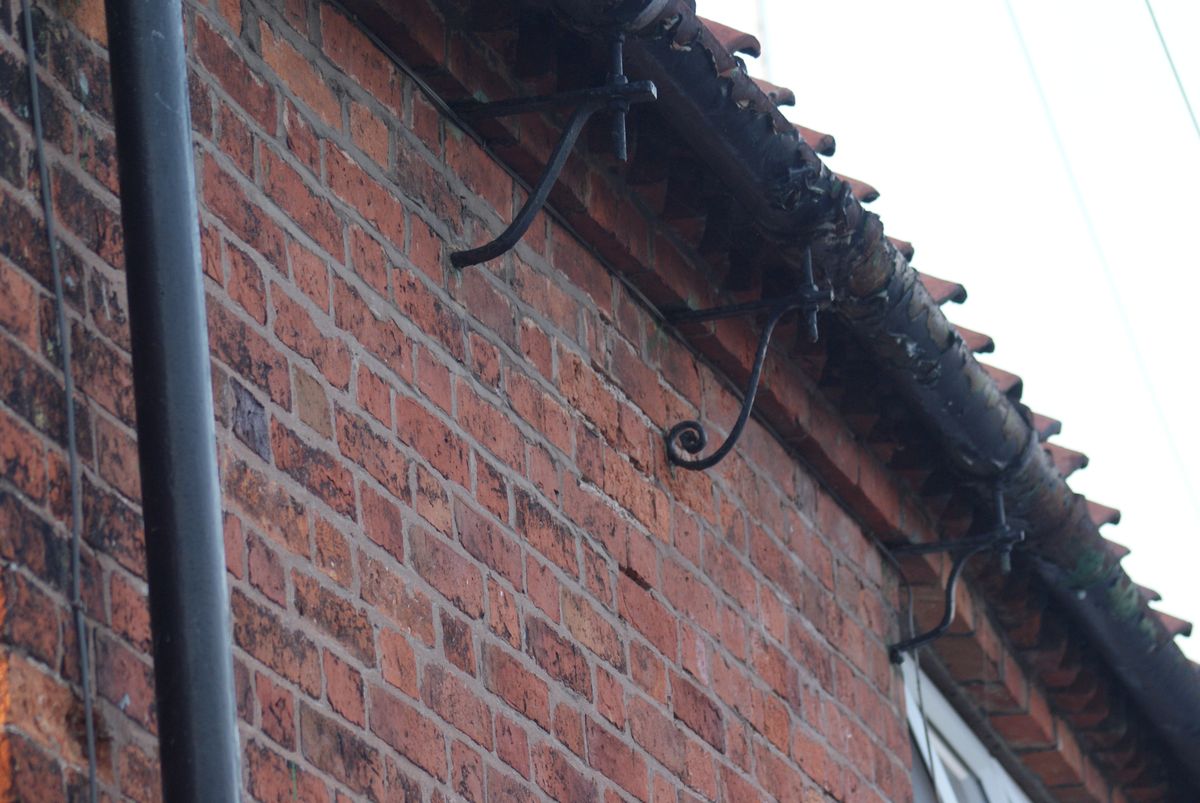
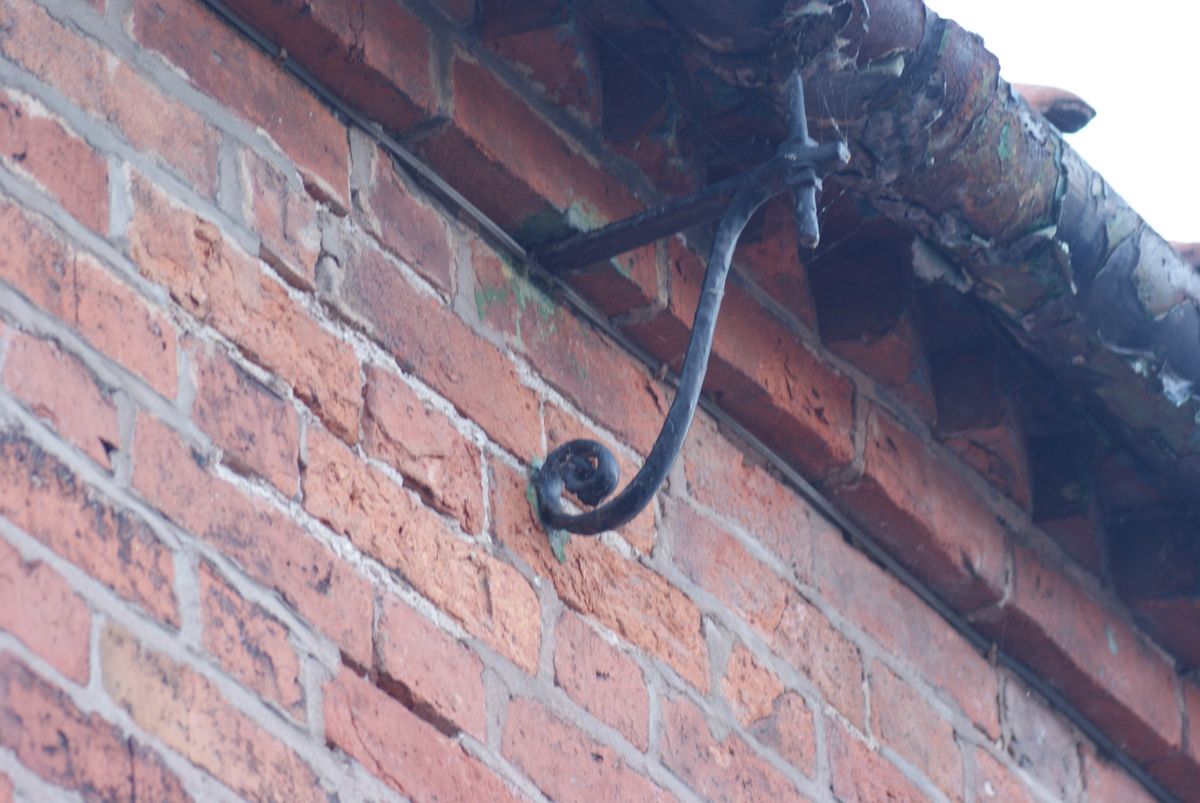
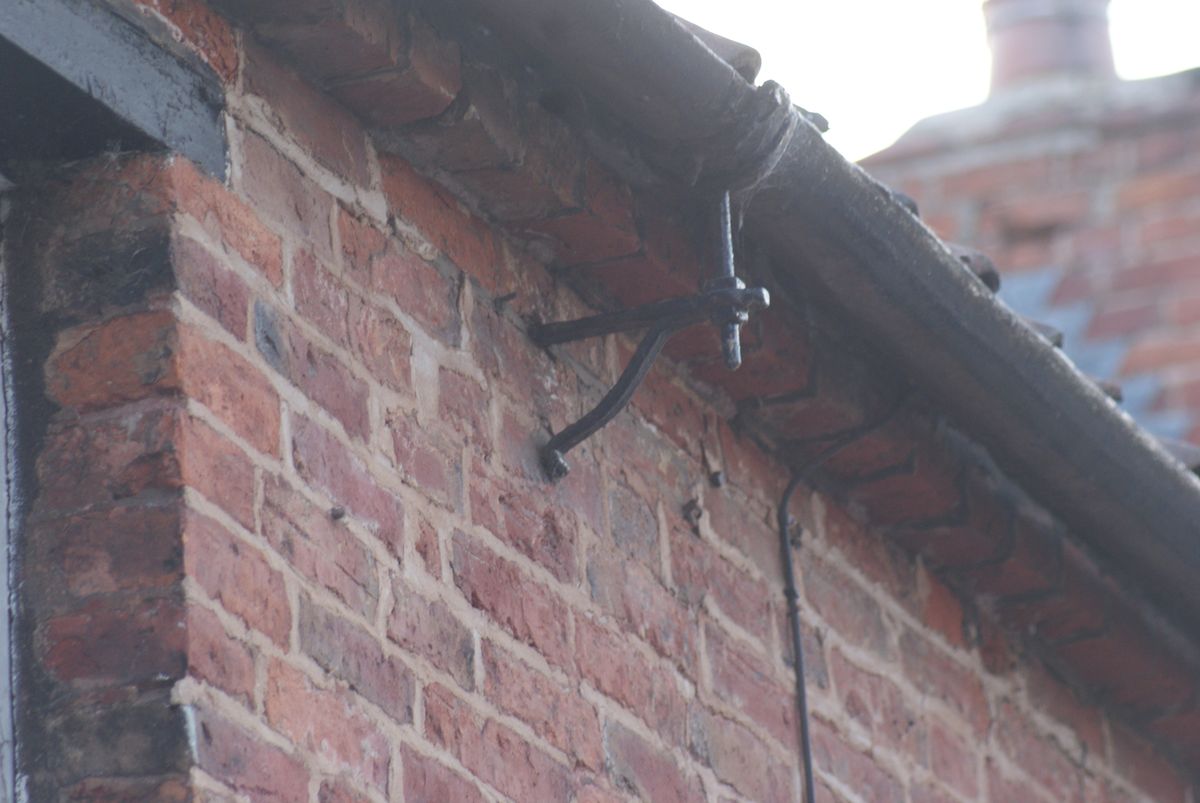
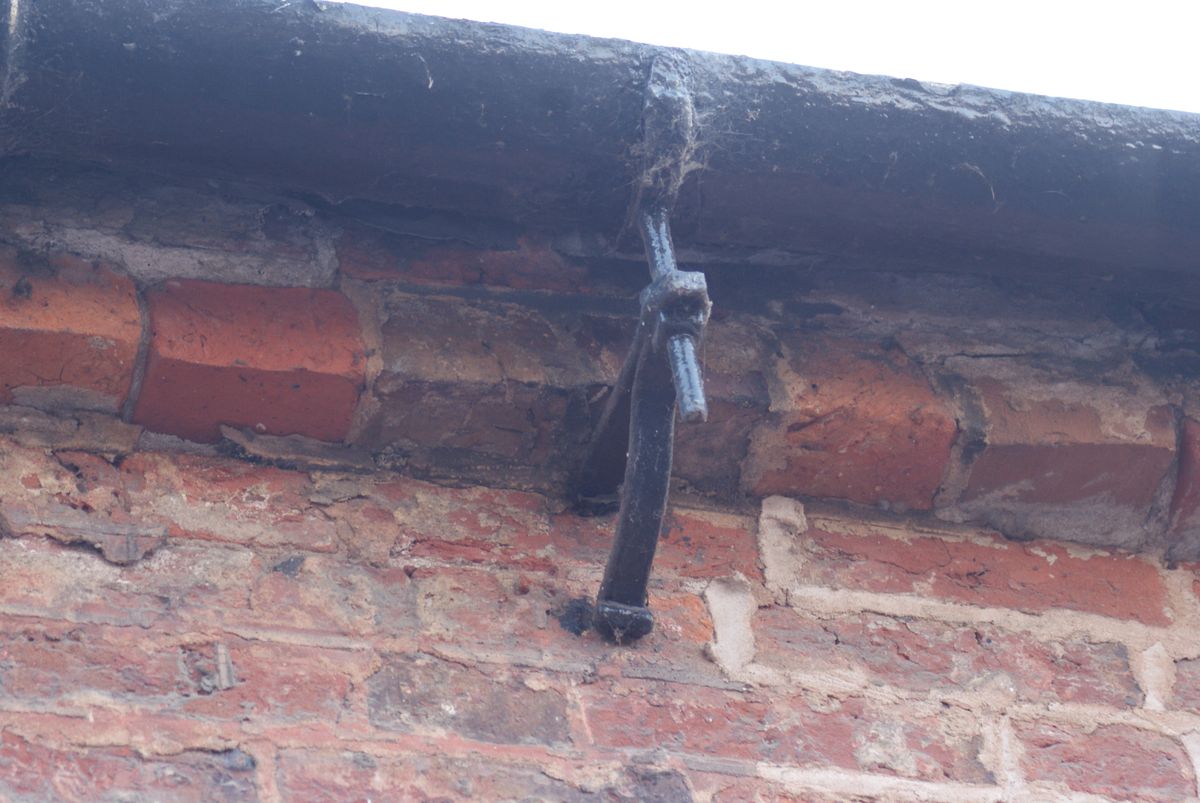
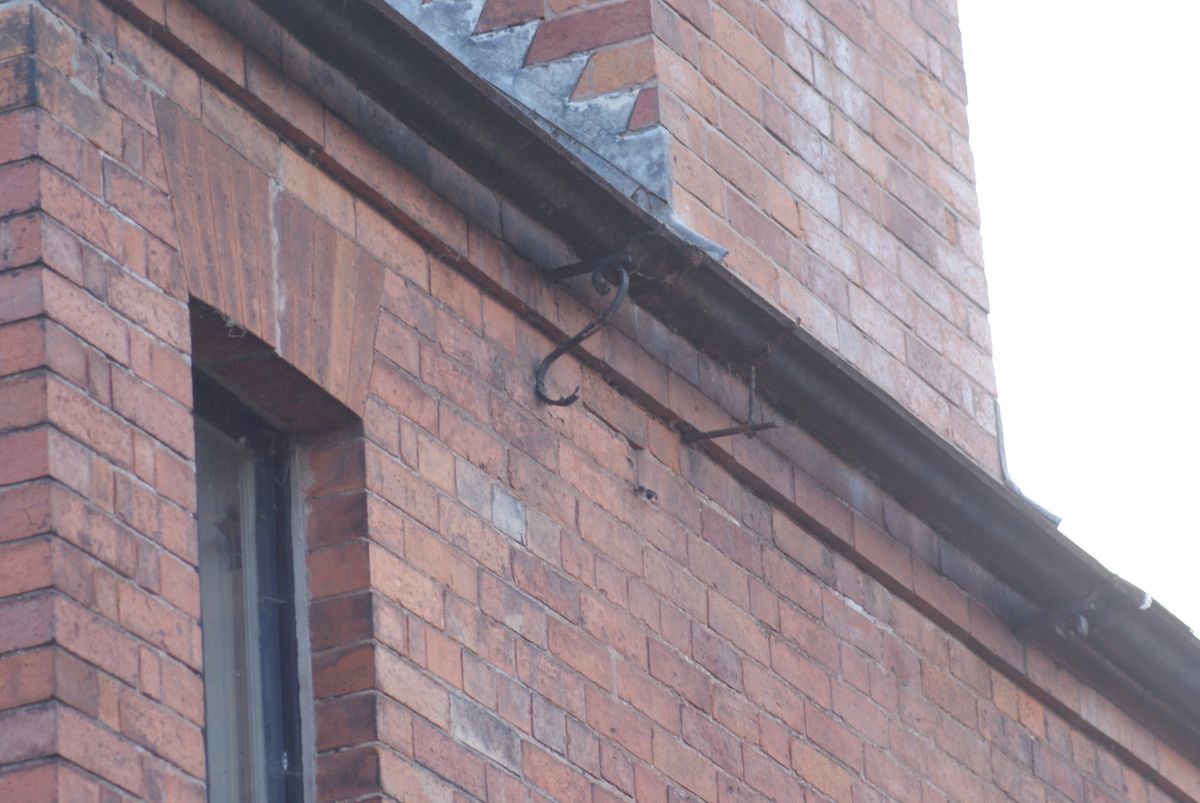
The first rainwater metal gutter brackets I came across were holding up some beefy cast iron guttering. At first sight they looked original. However, when I zoomed in it became obvious they were reproductions — yet reproduced with care; please see images 1–3. The smith who created these sturdy gutter brackets had even gone the extra mile, fabricating their own threaded connecting bar. By die, as it looks — there’s no tell-tale sign at the end of the bar that would indicate a thread cut single-point on a lathe.
Station St: Early Mass-Produced Finds
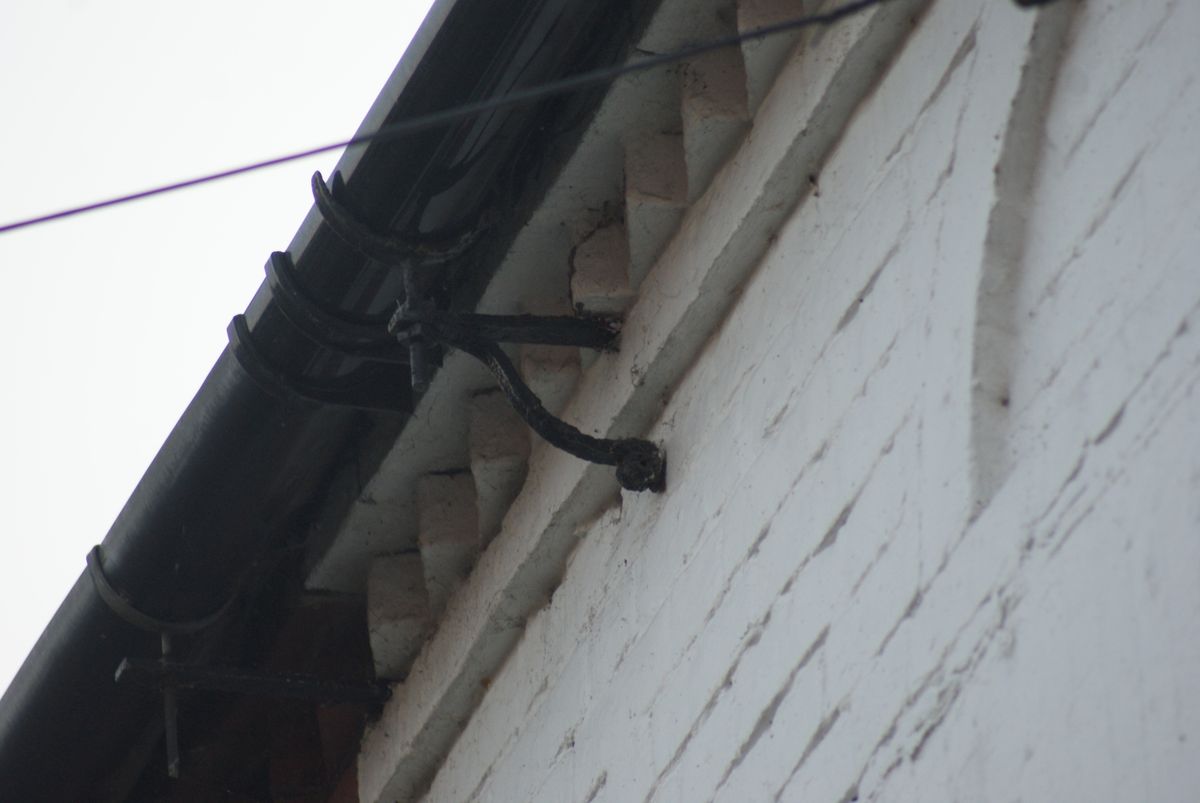
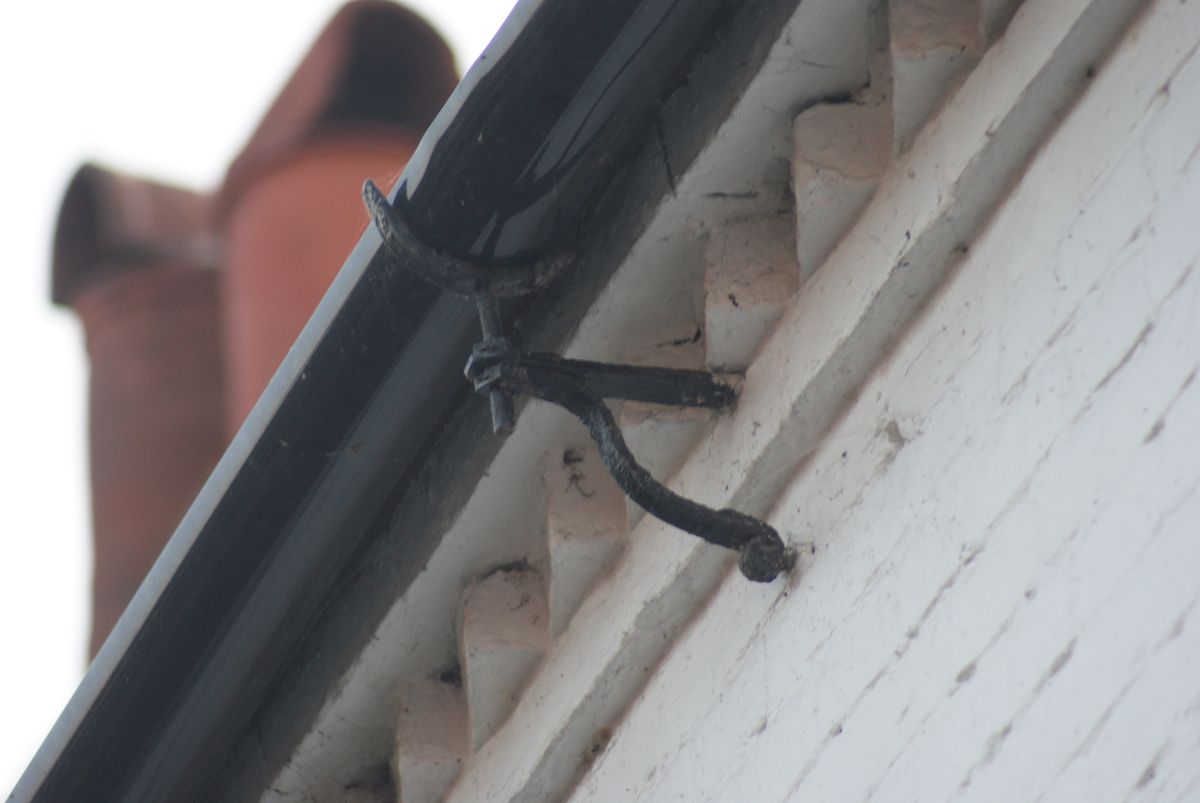
After admiring this blacksmith’s hand work on the restoration of the old parish council building’s gutter brackets, I headed west towards Station St, as ever, looking up. There were a couple of good examples from the early mass-produced era, the square nuts being the giveaway sign (please see pictures 7–10). Yet what was a pleasure to see was that someone had bothered to give them a lick of paint recently. It really does make the world of difference. And not only from an aesthetic perspective either — a brushing of metal paint every decade will ensure longevity of these beautiful historic structures. Each year that passes they become rarer.
Paint, Preservation, and Longevity
Along Station St I was gifted with a couple of lovely examples of both a handmade blacksmith’s gutter bracket and an array of early factory-made samples. Images 4–6 are the latter, yet they’re still stunning after 70-plus years of weathering. These gutter brackets were built to last — and last they have. Another interesting feature, also pointed out in the blog about Tuxford’s traditional rainwater collection, is the pattern the original roofers arranged the brackets in: scroll, then foot, then scroll again. But the real icing on the cake for me is the bevelled facing edge of the support. Lovely stuff.
The Last Scroll: A Blacksmith’s Echo
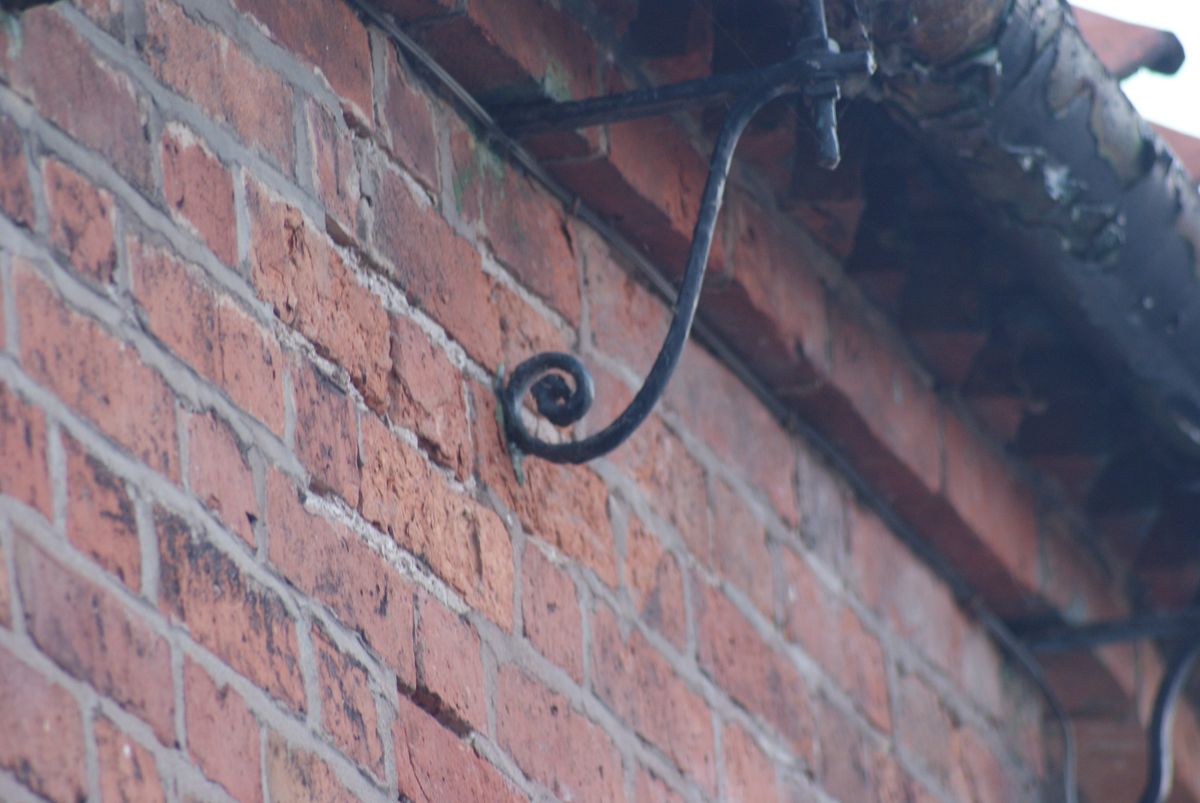
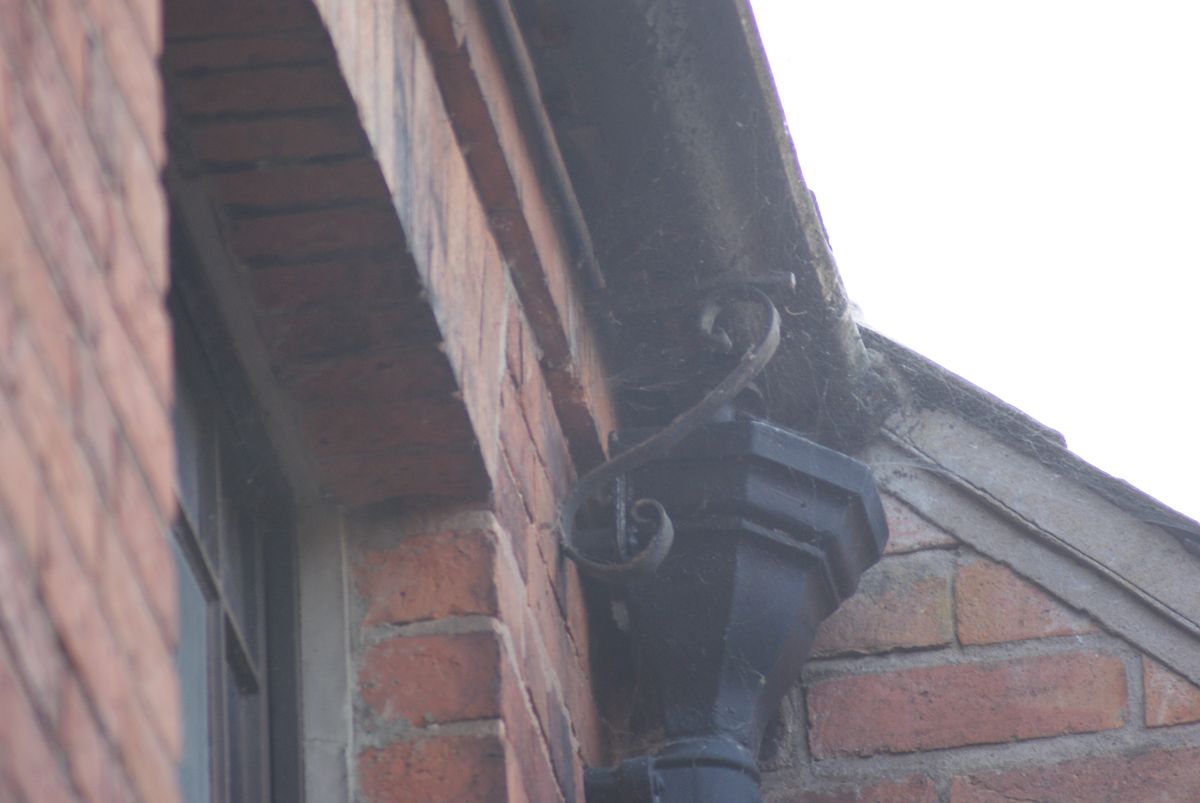
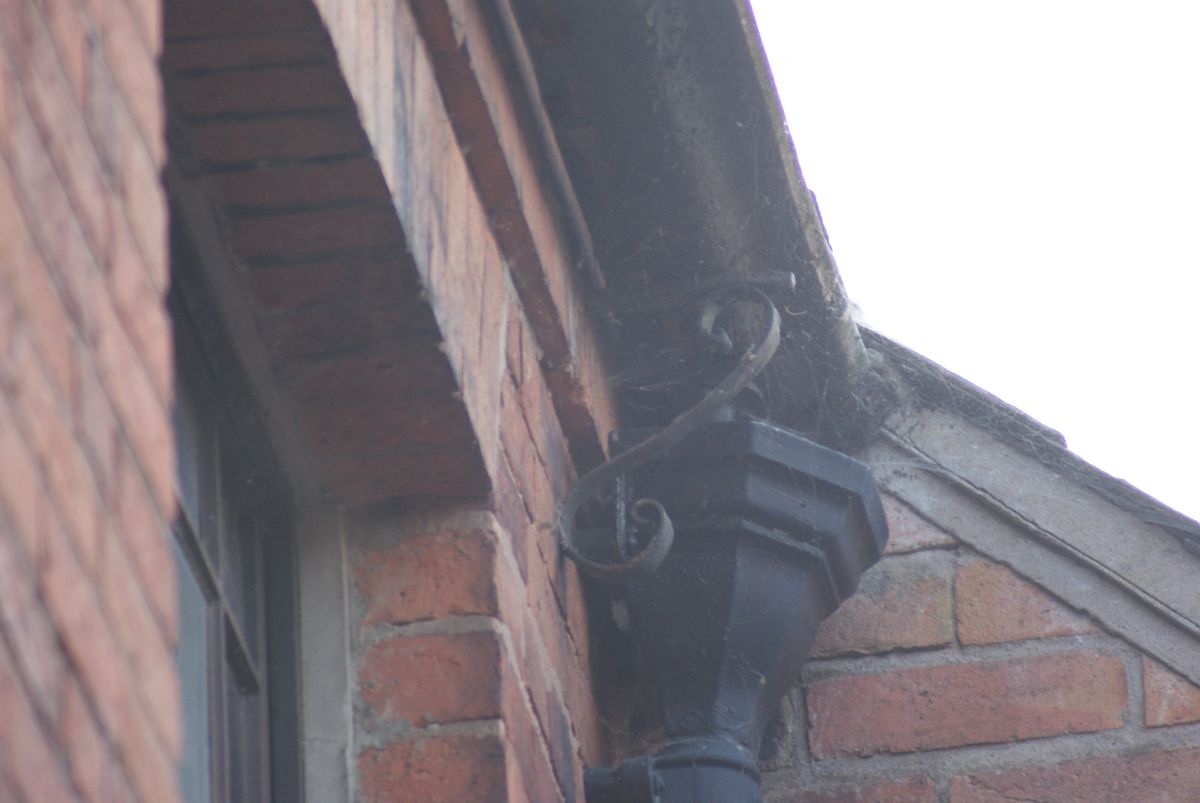
Finally, the blacksmith-forged example — or at least what’s left of one. We can use the remaining intact scroll to give us an idea of what they would have looked like in their heyday (see images 11–12). If you squint really hard at image 12, you can just make out the tapered end of the scroll. Nothing too fancy. He’d opted for understatement, but with that unmistakable treble clef shape ringing into the future. And if you listen closely, you’ll probably still hear the sound of his anvil.